Physical Address
304 North Cardinal St.
Dorchester Center, MA 02124
Physical Address
304 North Cardinal St.
Dorchester Center, MA 02124

We may earn money or products from the companies mentioned in this post.
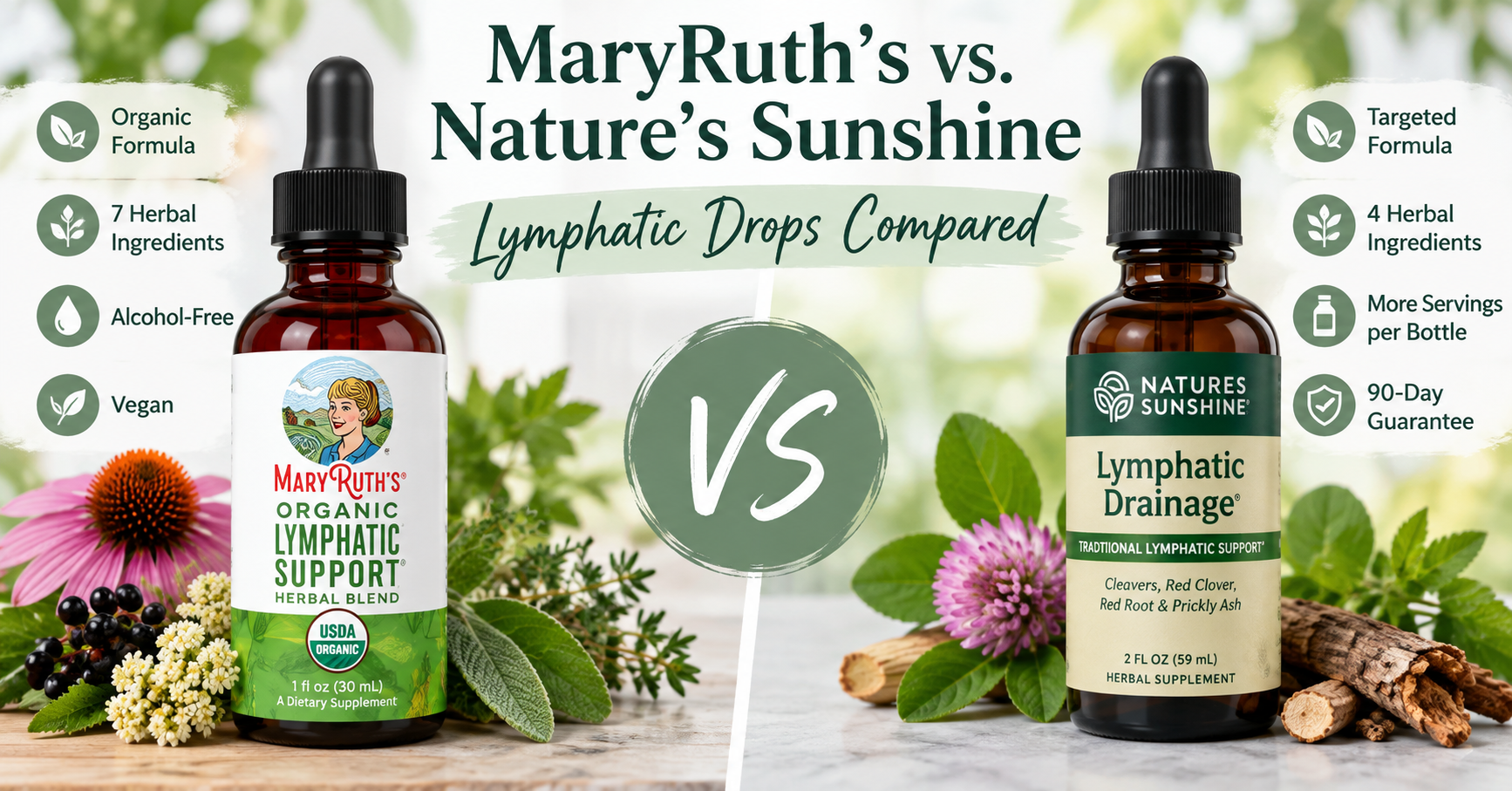
If you’re looking for lymphatic drainage drops, two products that often stand out are MaryRuth’s Organic Lymphatic Support Herbal Blend and Nature’s Sunshine Lymphatic Drainage.
Both are liquid herbal supplements designed to support healthy lymphatic function, but they take noticeably different approaches.
MaryRuth’s uses a larger blend of organic herbs, including echinacea, elderberry, blue vervain, yarrow, myrrh, and thyme. Nature’s Sunshine takes a more targeted approach with four primary botanicals: cleavers, red clover flower, red root, and prickly ash bark.
So which one is better?
MaryRuth’s may be the better choice if you prefer an organic, multi-herb formula with a broader ingredient profile, while Nature’s Sunshine may appeal more to people who want a simpler, more targeted lymphatic formula with clearly disclosed individual ingredients.
Let’s take a closer look at how they compare.
| Feature | MaryRuth’s Lymphatic Support | Nature’s Sunshine Lymphatic Drainage |
|---|---|---|
| Form | Liquid drops | Liquid drops |
| Bottle size | 1 fl oz (30 mL) | 2 fl oz |
| Price | $21.99 | $37.95 |
| Servings | About 30 | 59 |
| Suggested use | Up to 1 mL, 1–3 times daily | 1 mL twice daily |
| Main herbs | 7-herb blend | 4-herb blend |
| Organic | USDA Organic | Not marketed as USDA Organic |
| Alcohol-free | Yes | Yes |
| Vegan | Yes | — |
| Ingredient amounts disclosed individually? | No, proprietary blend | Yes, individual ingredients listed |
| Testing | Clean Label Project certification is available across much of MaryRuth’s product line | Batch testing for potency, heavy metals, pesticides and microbial contamination |
| Money-back guarantee | — | 90 days |
Still deciding between the two? Take a closer look at each product and see which one fits your preferences.
Prefer an organic, seven-herb formula?
Prefer a simpler formula with more servings per bottle?
Check the current price of Nature’s Sunshine Lymphatic Drainage →
Lymphatic drainage drops are liquid herbal supplements marketed to support normal lymphatic system function.
The lymphatic system plays important roles in fluid balance and immune function. Unlike the cardiovascular system, which has the heart to circulate blood, the lymphatic system relies heavily on body movement, muscle contractions, breathing, and other mechanisms to move lymph fluid.
Some herbal supplements are marketed as a way to complement a healthy lifestyle and support normal lymphatic circulation.
However, it’s important to keep expectations realistic. Lymphatic supplements aren’t a replacement for medical treatment, and there isn’t strong clinical evidence showing that these products can treat a lymphatic disorder.
With that in mind, let’s compare the two formulas.
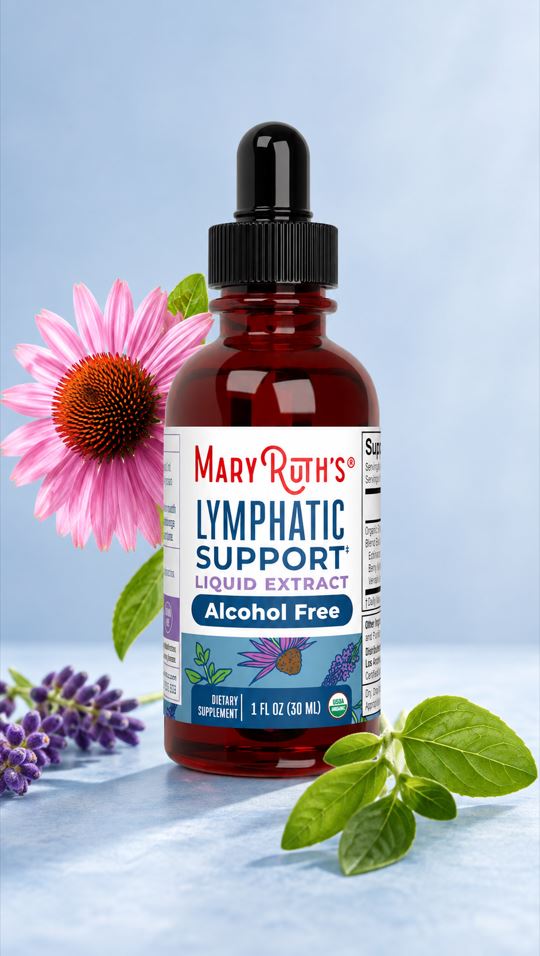
MaryRuth’s Organic Lymphatic Support Herbal Blend is a 1 fl oz liquid herbal supplement containing a proprietary blend of organic herbs.
The current formula contains:
The manufacturer states that each 1 mL serving contains 1.18 g (1,180 mg) of the organic proprietary blend extract, although the individual quantities of the herbs aren’t disclosed.
The formula is also vegan, USDA Organic, and alcohol-free. MaryRuth’s recommends that adults 18 and older take up to 1 mL one to three times per day, or as recommended by a healthcare professional.
Organic formula: If organic certification is important to you, this is one of the biggest advantages.
More herbs in one formula: MaryRuth’s contains seven botanical ingredients, giving it a broader herbal profile than Nature’s Sunshine.
Alcohol-free: The liquid is made without an alcohol-based tincture.
Lower upfront price: At the current listed price of $21.99 for 1 fl oz, MaryRuth’s costs considerably less upfront than Nature’s Sunshine.
Established supplement brand: MaryRuth’s also emphasizes third-party testing through the Clean Label Project for many of its products, screening for contaminants such as heavy metals and pesticides.
The biggest drawback is ingredient transparency.
Although MaryRuth’s tells you exactly which herbs are included, the individual amounts aren’t provided because they’re part of a proprietary blend. That makes it difficult to compare the strength of each individual botanical with other products.
The bottle is also smaller at 1 fl oz and contains approximately 30 servings.
Check Out Our Full Review On MaryRuth’s Lymphatic Drops Here
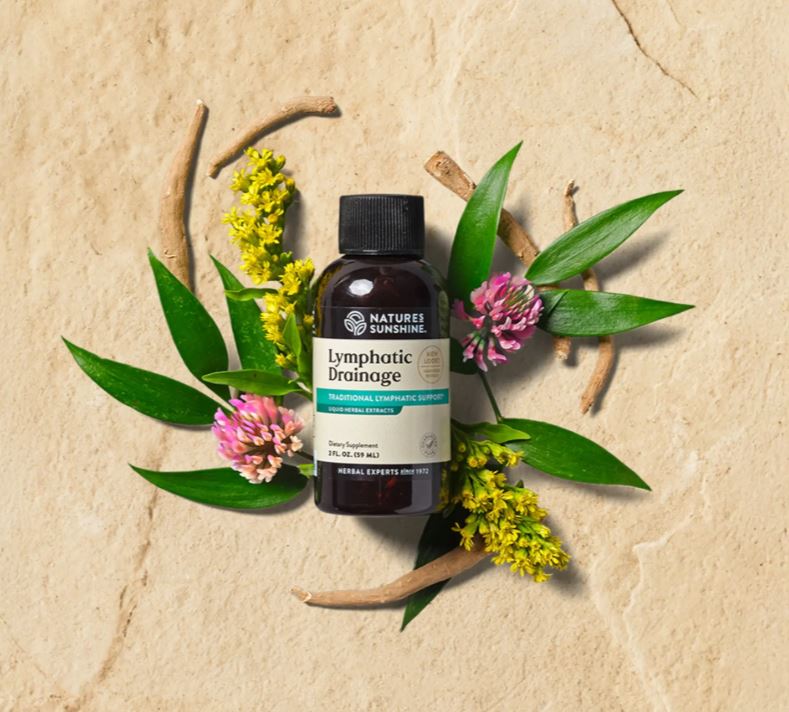
Nature’s Sunshine Lymphatic Drainage takes a different approach.
Instead of using a larger multi-herb blend, the formula focuses on four primary botanicals:
The base consists of vegetable glycerin and water.
The recommended serving is 1 mL (approximately 15–20 drops or ¼ teaspoon) twice daily, and the manufacturer lists the bottle as providing 59 servings.
Nature’s Sunshine currently lists the product at $37.95 for a 2 fl oz bottle, although subscribing can reduce the price by 25%. The company also offers a 90-day money-back guarantee.
More targeted formula: With four primary herbs, the formula is considerably simpler than MaryRuth’s.
Larger bottle: You get 2 fl oz and 59 servings compared with approximately 30 servings from MaryRuth’s 1 fl oz bottle.
Ingredient transparency: Nature’s Sunshine identifies the individual botanicals rather than hiding them behind a proprietary blend.
Batch testing: The manufacturer states that its latest batches are tested for potency, identity, heavy metals, pesticides, and microbial contamination.
90-day guarantee: Nature’s Sunshine currently backs the product with a 90-day money-back guarantee.
The main disadvantage is the higher upfront price.
At $37.95, Nature’s Sunshine costs about $16 more per bottle than MaryRuth’s at its current listed price.
However, the comparison isn’t quite as dramatic when you consider the amount of product. Nature’s Sunshine contains 59 servings compared with approximately 30 servings for MaryRuth’s.
Nature’s Sunshine also isn’t marketed as a USDA Organic product, which may matter if organic certification is one of your priorities.
Check Out Our Full Review On Nature’s Sunshine Lymphatic Drops Here
This is probably the biggest difference between these two supplements.
MaryRuth’s uses a seven-herb proprietary blend:
Echinacea + Elderberry + Plantain + Blue Vervain + Yarrow + Myrrh + Thyme
This gives the product a broader herbal profile and includes several herbs traditionally associated with immune and general wellness support.
The downside is that you don’t know how much of each individual herb you’re getting.
Nature’s Sunshine uses four primary herbs:
Cleavers + Red Clover + Red Root + Prickly Ash
The formula is much more specifically positioned around traditional lymphatic herbal support. Nature’s Sunshine also emphasizes that it doesn’t use a proprietary blend for this product, allowing consumers to see the individual ingredients on the label.
That really depends on your preference.
If you like broader herbal formulas, MaryRuth’s may be more appealing.
If you prefer fewer ingredients with a more targeted formula and greater label transparency, Nature’s Sunshine has an advantage.
Neither approach is automatically better.
At first glance, MaryRuth’s is the clear winner.
MaryRuth’s currently lists its 1 fl oz bottle at $21.99, while Nature’s Sunshine lists its 2 fl oz bottle at $37.95.
But there’s another important factor: servings.
MaryRuth’s provides approximately 30 servings per bottle, while Nature’s Sunshine provides 59 servings.
Using the manufacturer’s suggested serving sizes, that works out to roughly:
So while Nature’s Sunshine costs more when you place the order, the cost per listed serving is actually slightly lower.
That’s an important distinction if you’re planning to use the product regularly.
The products have slightly different instructions.
MaryRuth’s recommends adults 18+ take up to 1 mL one to three times per day.
Nature’s Sunshine recommends 1 mL twice per day.
For someone who prefers a simple routine, Nature’s Sunshine may be easier because the recommended schedule is simply twice a day.
MaryRuth’s gives users more flexibility within its recommended range.
It’s important not to interpret the higher maximum serving recommendation as meaning MaryRuth’s is necessarily stronger or more effective. The two products use different herbal extracts and formulations, so the milliliter amounts aren’t directly comparable.
There isn’t one winner for everyone.
For most people specifically looking for a targeted lymphatic herbal formula, I’d give Nature’s Sunshine a slight edge.
The biggest reason isn’t that it’s necessarily more effective. There simply isn’t enough evidence to say that one of these products works better than the other.
Instead, Nature’s Sunshine has a few practical advantages: a simpler formula, transparent ingredient listing, a larger bottle, nearly twice as many servings, and a 90-day money-back guarantee.
That said, MaryRuth’s is arguably the better choice if organic certification is a priority. It’s also less expensive upfront and contains a broader collection of herbs.
Compare both products and see which one fits your needs:
Best for organic ingredients: MaryRuth’s
Best for ingredient transparency: Nature’s Sunshine
Best upfront price: MaryRuth’s
Best value per serving: Nature’s Sunshine
Best for a larger bottle: Nature’s Sunshine
Best for a broader herbal blend: MaryRuth’s
Best overall for targeted lymphatic support: Nature’s Sunshine
Ultimately, either can be a reasonable option for someone looking to add an herbal lymphatic-support supplement to an otherwise healthy routine.
Just remember that supplements should complement—not replace—appropriate medical care, particularly if you’re experiencing persistent swelling or other unexplained symptoms.
What to view more Lymphatic Supplements? Check out our Top 5 Lymphatic Supplements here
Herbal supplements aren’t appropriate for everyone. If you’re pregnant or breastfeeding, taking prescription medications, have an underlying health condition, or are considering a supplement for a specific medical concern, talk with your doctor or another qualified healthcare professional before using it.
Neither MaryRuth’s Lymphatic Support nor Nature’s Sunshine Lymphatic Drainage should be considered a treatment for lymphedema, lipedema, or another diagnosed medical condition.
The statements made about these products have not been evaluated by the FDA. These products are not intended to diagnose, treat, cure, or prevent any disease.
Cleavers is one of the most traditional herbs used in Western herbalism for lymphatic support. Herbalists have used it for centuries to address swollen lymph nodes, sluggish lymph flow, and general lymph stagnation.
While there isn’t a lot of modern clinical research specifically on cleavers for lymph drainage, its use is well-documented in traditional herbal texts and it appears in many practitioner-level lymph formulas.
Lymphatic drainage drops are not designed for fat loss. They may help reduce temporary water retention or puffiness in some people, which might make you feel lighter or less bloated, but this is fluid redistribution, not fat loss.
If you’re looking to lose weight, you need to focus on diet, exercise, and overall calorie balance.
Lymph support supplements can be part of a wellness routine, but they won’t directly cause fat loss.
Most people tolerate lymphatic drainage supplements well, but some herbs can cause side effects in sensitive people. Echinacea can trigger allergic reactions in people with ragweed allergies.
Prickly ash bark and other circulatory stimulants may cause digestive upset or increased urination in some users.
Red clover has mild phytoestrogenic effects, which may not be suitable for everyone. Always start with a lower dose to assess tolerance, and talk to a healthcare provider if you’re on medications or have existing health conditions.
Traditional lymphatic herbs include cleavers, stillingia root, red clover, prickly ash bark, and burdock root. These herbs have been used historically to support lymph flow and promote detoxification through lymphatic pathways.
More modern formulas sometimes include circulatory herbs like ginger or cayenne to stimulate movement, or immune herbs like echinacea to support lymph tissue.
The best herb for you depends on your specific goals and whether you’re looking for targeted lymph drainage or broader immune support.
MaryRuth Lymphatic Support contains herbs primarily associated with immune function, like echinacea and elderberry, which may indirectly support lymph tissue during illness. However, if you have persistently swollen lymph nodes, you need to see a healthcare provider to rule out infection or other underlying conditions.
Supplements should not be used as a substitute for proper medical evaluation when you have concerning symptoms.
Most people need to take lymphatic drainage supplements consistently for four to six weeks before they notice subtle changes. The effects tend to be added rather than immediate.
You might notice reduced puffiness, better energy, or fewer episodes of congestion over time.
If you’re not seeing any benefits after six weeks of consistent use, the formula may not be right for your body, or you may need to address other foundational factors like hydration, movement, and diet.
Yes, both MaryRuth Organics Lymphatic Support and Natures Sunshine Lymphatic Drainage are designed for daily use at the recommended doses. Consistency is key with herbal formulas.
Taking them sporadically won’t give you the same added benefits as taking them daily for several weeks.
However, if you experience any adverse effects, you should stop taking them and ask with a healthcare provider or herbalist.
Stillingia root is a traditional alterative herb, meaning it was historically used to promote cleansing of the blood and lymph. In older American herbalism, it was commonly included in formulas for chronic skin conditions, lymph congestion, and systemic detoxification. There isn’t a lot of modern clinical research on stillingia, but it stays a staple in traditional lymphatic drainage formulas used by herbalists.