Physical Address
304 North Cardinal St.
Dorchester Center, MA 02124
Physical Address
304 North Cardinal St.
Dorchester Center, MA 02124


If your legs or feet tend to feel swollen, puffy, or uncomfortable throughout the day, compression socks may be worth considering. Designed to provide graduated pressure along the lower leg, compression socks are a popular option for people who spend long periods sitting or standing, travel frequently, or experience occasional leg swelling.
Compression socks come in different compression levels, materials, sizes, and styles. Some are designed for everyday wear, while others are better suited for travel, exercise, or people who need a wider calf fit.
To help you find the right pair, we’ve compared five popular compression socks based on price, customer ratings, compression level, sizing, features, and overall value.
*This blog contains affiliate links, meaning I may earn a commission if you click through and make a purchase, at no additional cost to you. I only recommend products I trust and believe will add value to my readers.*
| Product | Best For | Compression | Price | Rating |
|---|---|---|---|---|
| Physix Gear Compression Socks | Best Overall | 20–30 mmHg | $29.02 | 4.5/5 |
| Doctor’s Select Wide Calf Compression Socks | Best for Wide Calves | 20–30 mmHg | $25.95 for 3 pairs | 4.5/5 |
| Copper Fit Easy On/Off Energy Socks | Best Easy-On Option | Not specified | $11.87 | 4.4/5 |
| NEENCA Professional Compression Socks | Best Copper-Infused Option | 20–30 mmHg | $17.98 | 4.4/5 |
| Iseasoo Copper Compression Socks | Best Multi-Pack | 15–20 mmHg | $19.98 for 8 pairs | 4.6/5 |
Prices and ratings can change over time. Check the retailer for the latest price, sizing, and product specifications before purchasing.
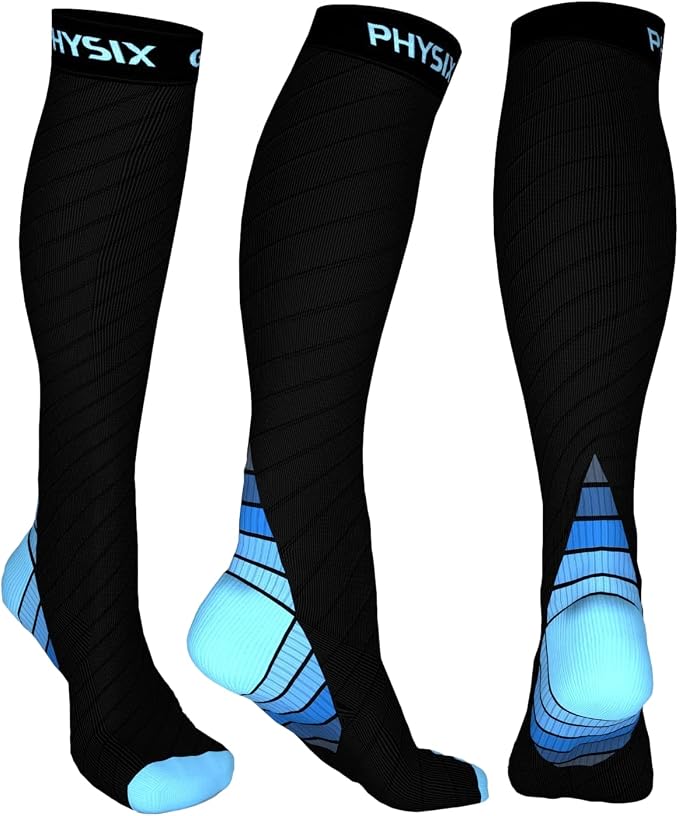
Price: $29.02 per pair
Rating: 4.5/5 from 29,011 reviews
Compression: 20–30 mmHg
The Physix Gear Compression Socks are a versatile option for people looking for compression socks to wear during work, exercise, travel, or everyday activities.
These knee-high socks provide 20–30 mmHg graduated compression, with the strongest pressure concentrated around the ankle. They’re made from a nylon and spandex blend designed to provide a snug, supportive fit without sacrificing everyday comfort.
The socks are available in several sizes, including S/M, L/XL, and XXL.
The biggest advantage of the Physix Gear socks is their versatility. They’re designed for several situations in which people may notice their legs feeling tired, heavy, or swollen, including long work shifts, travel, and exercise.
The 20–30 mmHg compression level also makes them a good option for shoppers specifically looking for moderate compression. With more than 29,000 customer ratings and a 4.5-star average, they have a substantial amount of customer feedback compared with many specialty compression socks.
Best for: People who want an all-around compression sock for everyday wear, work, travel, and exercise.
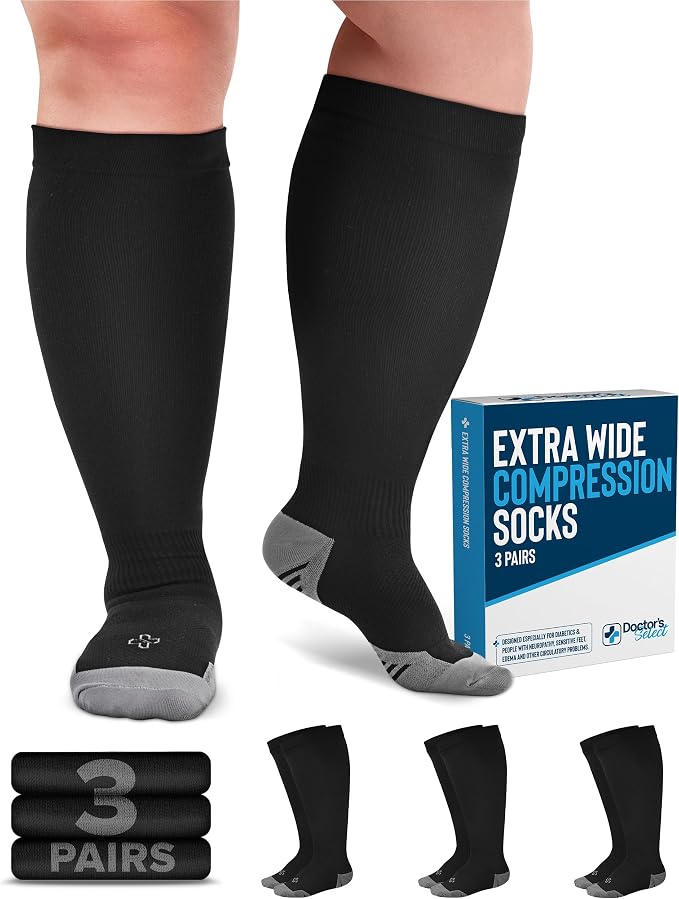
Price: $25.95 for 3 pairs
Rating: 4.5/5 from 1,361 reviews
Compression: 20–30 mmHg
Finding compression socks that fit comfortably around a wider calf can be challenging. The Doctor’s Select Plus Size Compression Socks are specifically designed to accommodate larger calf measurements, with sizes extending from XL through 6XL.
The socks use 20–30 mmHg graduated compression, with the strongest pressure around the ankle gradually decreasing up the leg.
The three-pair package also makes these an attractive choice for people who want multiple pairs for regular use.
The extensive sizing is the biggest reason to consider these socks.
People with larger calves may find that standard compression socks feel uncomfortably tight or don’t provide an appropriate fit. Doctor’s Select offers considerably more sizing flexibility, including 5XL and 6XL options.
The three-pair package is another advantage. At $25.95 for three pairs, the cost per pair is considerably lower than buying many individual compression socks.
If standard compression socks tend to feel too tight around your calves, these are worth considering.
Best for: People who need wide-calf or plus-size compression socks and want multiple pairs.
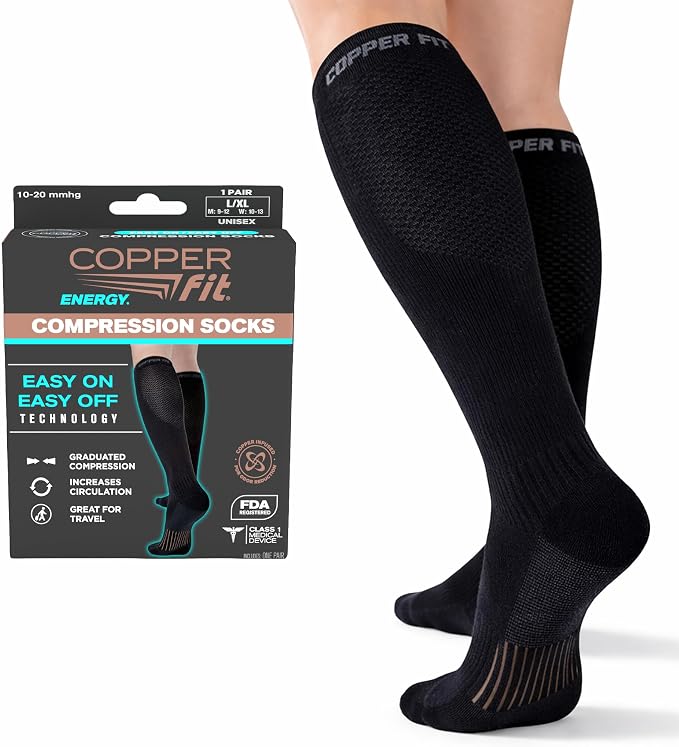
Price: $11.87 per pair
Rating: 4.4/5 from 24,170 reviews
Compression: Compression level not specified in the provided listing
Compression socks are designed to fit snugly, which can make some pairs difficult to put on and take off. Copper Fit’s Easy On/Off Energy Compression Socks are designed specifically with convenience in mind.
These knee-high socks provide compression support around the arch, feet, and calves. They also feature a cushioned footbed for additional comfort during extended wear.
The fabric contains copper-infused fibers and is made from 78% nylon, 14% spandex, and 8% polyester.
If you’ve struggled to pull on a tight pair of compression socks, the easy-on/off design is a major advantage.
These socks are also one of the most budget-friendly choices on the list at around $12 per pair. The cushioned footbed adds another comfort feature for people who spend long periods standing or walking.
The multiple size ranges also make them a practical option for shoppers who don’t fit comfortably into smaller standard sizes.
Best for: People who want a more convenient compression sock that’s easier to put on and take off.
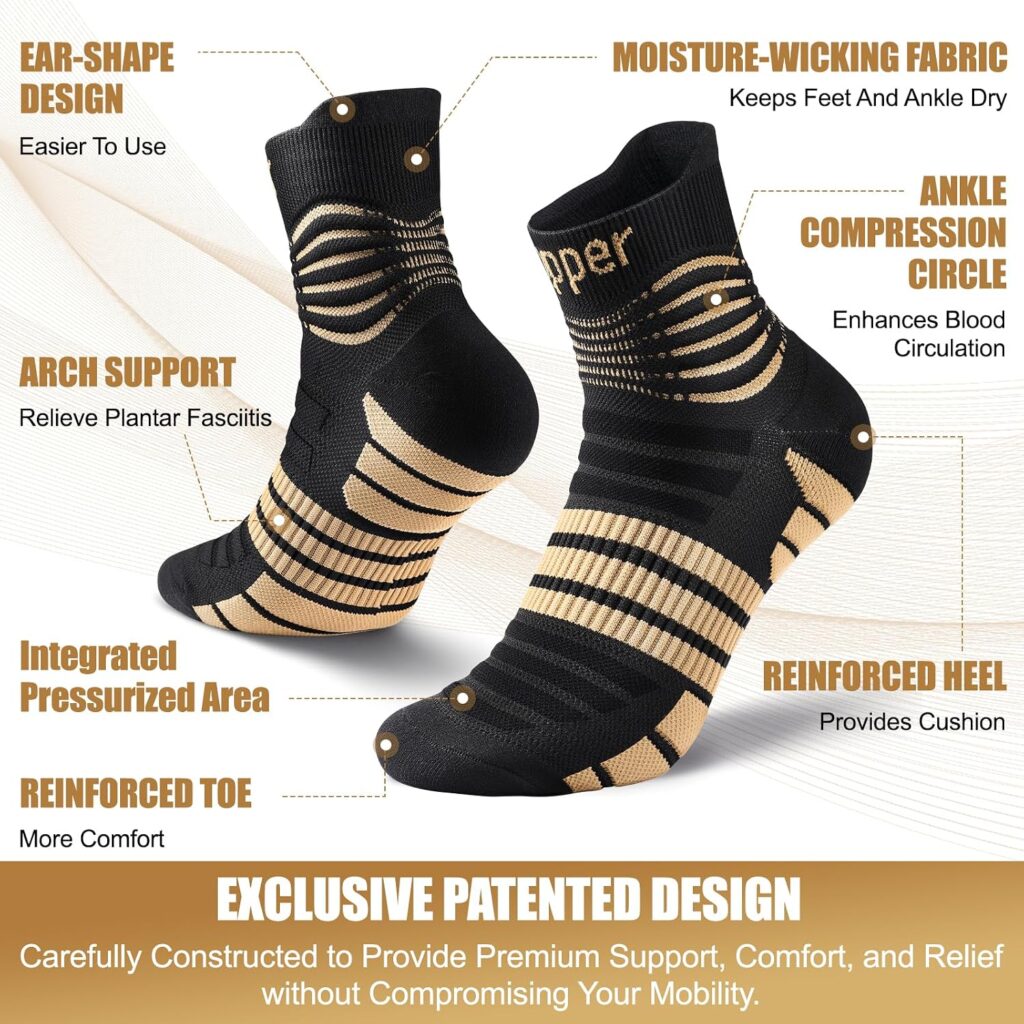
Price: $17.98 per pair
Rating: 4.4/5 from 759 reviews
Compression: 20–30 mmHg
The NEENCA Professional Compression Socks combine 20–30 mmHg compression with copper-infused fibers.
The socks use a blend of 24% copper-ion-infused fiber, 62% nylon, and 14% spandex. They also feature reinforced areas around the ankle and arch for additional support.
NEENCA offers these socks in multiple sizes, ranging from small through XX-large, with prices varying slightly by size.
The NEENCA socks are a good choice if you want a structured compression sock with additional support around the foot and ankle.
The reinforced ankle and arch areas are designed to provide additional support, while the breathable fabric is intended to help manage moisture during extended wear.
The 20–30 mmHg compression makes these particularly interesting for shoppers specifically searching for moderate compression. The socks work for both daytime activity and nighttime wear, and the high copper content aims to reduce inflammation and keep joints warm.
Best for: People who want 20–30 mmHg compression combined with a structured design and copper-infused fabric.
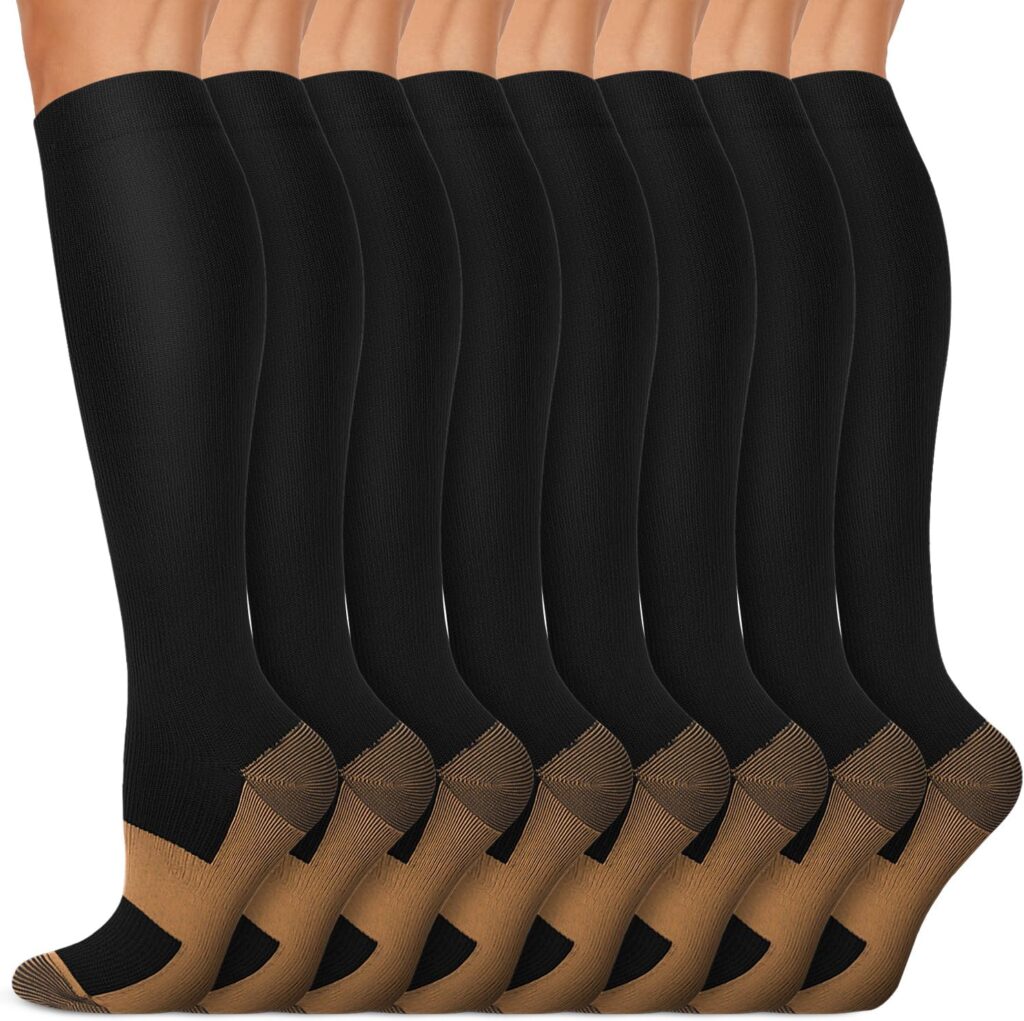
Price: $19.98 for 8 pairs
Rating: 4.6/5 from 35,595 reviews
Compression: 15–20 mmHg
If you’re looking for value, it’s difficult to overlook the Iseasoo Copper Compression Socks. The package contains eight pairs, making these one of the most economical choices on the list for someone who wants compression socks for regular use.
These socks provide 15–20 mmHg compression, which is a lighter compression level than the 20–30 mmHg options featured above.
The fabric contains 85% nylon, 10% polyester, and 5% copper fiber. It’s also designed to be breathable and moisture-wicking.
The biggest selling point is the value.
Getting eight pairs for around $20 makes these a practical choice if you want to wear compression socks frequently without spending $15–$30 on every individual pair.
The 15–20 mmHg compression is also lighter than the 20–30 mmHg options in this roundup, which may appeal to people who prefer less intense compression.
They’re particularly convenient for people who travel frequently, work long shifts, exercise regularly, or want enough pairs to wear throughout the week without constantly doing laundry.
Best for: Budget-conscious shoppers who want a large supply of lighter-compression socks.
The best compression socks for swollen legs depend on your preferred compression level, calf size, budget, and how you plan to wear them.
The Physix Gear Compression Socks are our top overall pick because they combine a 20–30 mmHg compression level, versatile design, reasonable price, and a large number of customer reviews.
If finding a comfortable fit around your calves is your biggest concern, the Doctor’s Select Plus Size Compression Socks stand out because they’re available up to 6XL and include three pairs.
The Copper Fit Easy On/Off Energy Compression Socks are worth considering if you’re worried about struggling to put compression socks on and take them off.
The NEENCA Professional Compression Socks combine 20–30 mmHg compression with copper-infused fibers and additional ankle and arch support.
For someone who wants a lot of pairs for a low price, the Iseasoo Copper Compression Socks are the clear value winner with eight pairs in a package.
If you’re dealing with more significant or persistent leg swelling, you may need something beyond a standard compression sock. In that case, take a look at our guide to the Best Compression Garments for Lymphedema of the Legs, where we compare adjustable wraps, compression leggings, calf braces, and other options designed specifically for lymphedema management.
Before buying compression socks, consider a few important factors.
Compression is measured in mmHg, or millimeters of mercury. The higher the number, the stronger the compression.
The products in this roundup range from 15–20 mmHg to 20–30 mmHg.
A lighter compression sock may be preferable for some people, while shoppers specifically looking for moderate compression may prefer a 20–30 mmHg option.
However, stronger compression isn’t automatically better. If you’ve been advised to use compression garments for a medical reason, follow your healthcare professional’s recommendation about the appropriate compression level.
A properly fitting compression sock should feel snug and supportive without being painfully tight.
Pay particular attention to the manufacturer’s sizing chart rather than automatically choosing your usual sock size. Calf circumference can be especially important when selecting compression socks.
If you have larger calves, the Doctor’s Select socks offer some of the most extensive sizing on this list.
Compression socks are often worn for several hours at a time, so fabric matters.
Nylon and spandex blends are common because they provide a combination of stretch, durability, and compression. Some products also incorporate copper-infused fibers, while others prioritize moisture-wicking or breathable materials.
Compression socks need to be snug to provide their intended compression, which can make them more difficult to put on than ordinary socks.
If this is a concern, look for designs specifically marketed as easy-on or easier to pull on, such as the Copper Fit Easy On/Off socks.
If you plan to wear compression socks frequently, buying a multi-pack can save money and make daily use much more convenient.
The Iseasoo socks come with eight pairs, while the Doctor’s Select option includes three pairs.
Compression socks are designed to apply graduated pressure to the lower leg. Some people use them when their legs feel swollen, heavy, or uncomfortable, particularly during long periods of sitting or standing.
However, swollen legs can have many different causes, and compression socks aren’t appropriate for everyone.
If swelling is new, persistent, severe, painful, occurs suddenly, or affects only one leg, don’t assume that compression socks are the right solution. It’s important to speak with a healthcare professional so the underlying cause can be evaluated.
People with certain circulation problems or other medical conditions should also ask a healthcare professional whether compression garments are appropriate before using them.
How tight should compression socks feel?
Compression socks should feel snug and supportive without causing pain or numbness. You’ll notice the most pressure at your ankle, gradually decreasing as the sock moves up your calf.
If you see red marks, feel tingling, or experience numbness, the socks are too tight and you need a larger size or lower compression level.
If the socks slide down or feel loose, they’re too big to provide proper compression.
Can you wear compression socks to bed?
Most experts recommend taking compression socks off at night unless your doctor specifically tells you to wear them while sleeping. Your legs are already elevated in bed, which helps with circulation naturally.
Wearing compression socks at night could potentially cause discomfort or circulation issues if they shift or bunch up while you sleep.
The NEENCA socks mention nighttime wear, but check with your doctor first.
How long does it take to see results from compression socks?
Many people notice immediate relief from achiness and heaviness as soon as they put compression socks on. Visible reduction in swelling typically happens within a few hours of wear.
For longer-term benefits like reduced varicose vein appearance or improved overall circulation, you’ll need to wear compression socks consistently for several weeks or months.
Think of them like exercise for your circulation system requiring regular commitment.
What’s the difference between 15-20 mmHg and 20-30 mmHg compression?
The numbers measure how much pressure the socks apply to your legs in millimeters of mercury. The 15-20 mmHg range offers mild to moderate compression suitable for tired, achy legs, minor swelling, and prevention during travel or long periods of standing.
The 20-30 mmHg range provides firm compression used for moderate to severe swelling, varicose veins, post-surgical recovery, and more serious circulation issues.
Most people start with 15-20 mmHg and move up if needed.
Do compression socks actually improve circulation or just hide swelling?
Compression socks actively improve circulation by applying graduated pressure that helps push blood back up your legs toward your heart. This fights against gravity and helps prevent blood from pooling in your lower legs.
They’re not just hiding the problem but addressing the underlying circulation issue that causes swelling in the first place.
Medical research supports compression therapy as an effective treatment for various circulation problems.
How do you wash compression socks to make them last longer?
Hand wash compression socks in cold water with mild detergent, rinse thoroughly, and lay flat or hang to dry. This preserves the elastic fibers that provide compression.
If you machine wash (check the label first), use cold water on a gentle cycle and put the socks in a mesh laundry bag for protection.
Avoid hot water, bleach, fabric softener, and the dryer because heat breaks down the elastic and reduces compression strength over time.
Should compression socks leave marks on your legs?
Slight indentation marks from the top band after removing compression socks are normal and typically fade within 30 minutes to an hour. Deep red marks, grooves, or indentations that last longer suggest the socks are too tight.
The top band should stay in place without excessive tightness.
If marks are a persistent problem, try the Doctors Select wide-calf design with a less constrictive top band, or size up if you’re between sizes.
Disclaimer: This article is for informational purposes only and is not intended to diagnose, treat, cure, or prevent any medical condition. Compression garments may not be appropriate for everyone. If you have an underlying medical condition, unexplained swelling, circulation concerns, or persistent leg symptoms, consult a qualified healthcare professional before using compression socks.